
Garage Door Off Track? Causes, Fixes & Safety Tips
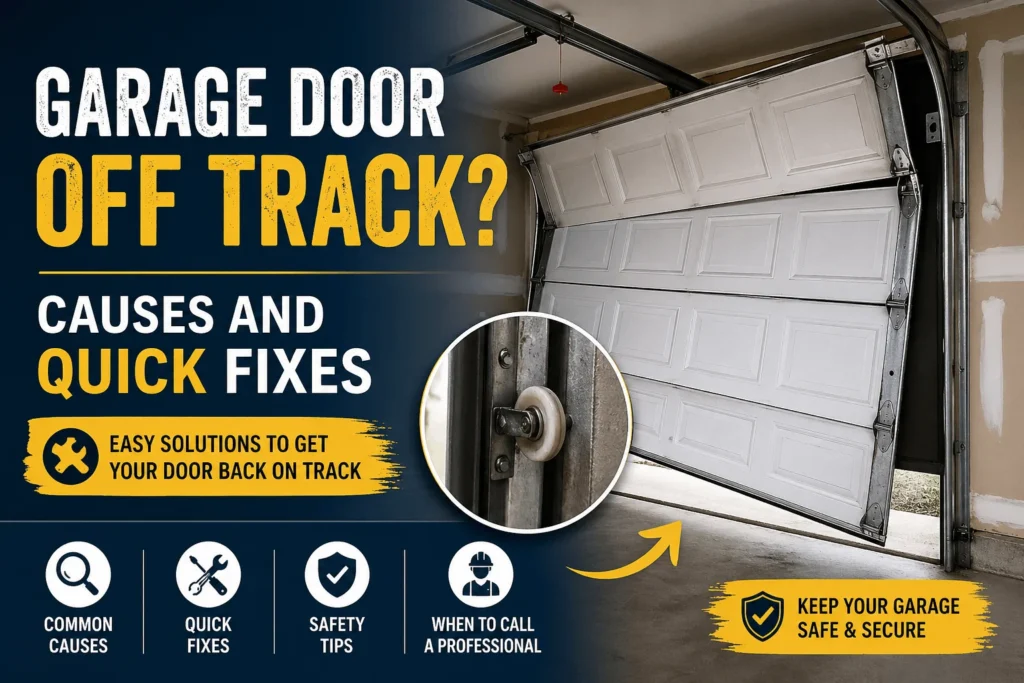
You press the remote, expecting a smooth glide, but instead, you’re met with a jarring screech and a door hanging precariously at a local angle. A garage door off track is more than a minor nuisance; it’s a serious safety hazard that can lead to snapped cables or total mechanical failure if forced.
For homeowners dealing with a garage door off track, Las Vegas-style, intense desert heat, and constant use can warp components or dry out lubricants, making this headache all too common. In this guide, we’ll break down the primary culprits from obstructed tracks to worn rollers and help you determine when a quick DIY adjustment works or when it’s time to call in the pros before further damage occurs.
Common Causes of a Garage Door Shifting Off Track
Obstructions in the Path
Even tiny pebbles, stray trash cans, or built-up debris can act as a physical blockade. When a moving roller hits an obstruction, the force often pushes the wheel out of the metal channel, causing the entire door to bind instantly.
Impact Damage
It happens to the best of us: backing out before the door is fully up. Even a low-speed tap can bend the bottom section or displace the vertical tracks, immediately knocking the rollers out of their designated alignment and track.
Loose or Damaged Tracks
The heavy vibration of daily operation eventually loosens the bolts securing your tracks to the garage walls. If the tracks shift or “gape,” the rollers lose their snug fit and eventually slip out of the channel during a standard opening cycle.
Worn or Broken Rollers
Rollers are the “tires” of your door. Over time, bearings seize, or the wheels flatten due to a lack of lubrication. When a roller stops spinning freely, it drags against the track, creating enough friction to pop out under the pressure.
Snapped Cables
Cables hold the door’s immense weight under high tension. If one snaps, the door loses its counterbalance, causing one side to sag heavily. This extreme imbalance pulls the rollers out of the track on the opposite side, jamming the system.
Initial Steps and Safety Precautions
Stop Operation Immediately
Never attempt to force the door using the automatic opener once it shifts. Due to the immense pressure exerted by the motor, cables can snap, and the drive gear can burn out. Moreover, it can bend the tracks beyond repair, turning a simple alignment into a costly overhaul.
Disconnect the Opener
Usually, a red handle hanging from the trolley is the emergency release cord. Pulling this disconnects the door from the motorized carriage. It will allow you to control the door manually and prevent the opener from accidentally engaging while you are inspecting the damage.
Visual Inspection
Carefully examine the rollers, brackets, and track bolts for visible damage or gaps. Springs and cables are under extreme tension, so keep your hands away from them. Check bent metal or loose hardware to figure out the cause of the misalignment.
Quick Fixes for Minor Alignment Issues
Cleaning the Tracks
Over time, old grease and desert dust mix together. This creates thick dirt that gets in the way of the rollers. Use a damp cloth and a mild cleaner to wipe the inside of the tracks. This will help to fix it. Cleaning out this dirt helps the door move more easily. It also keeps the rollers from jumping off the track
Tightening Hardware
The nuts and bolts wiggle loose over time due to the shaking of the garage door. To check the brackets that hold the tracks to the wall and the hinges on the door, use a wrench or a socket set.Must make sure that everything is tight and secure. But be careful not to overtighten them.
Lubricating Rollers and Tracks
Do not use WD-40 because it collects dust. Instead, use a special silicone or lithium spray made for garage doors. Spray the small wheels (rollers) and the curved parts of the tracks. This helps the door move quietly and keeps the parts from wearing out too fast.
Manual Re-alignment
If the door is light and the cables are not broken, you can sometimes put a loose roller back in yourself. Slightly loosen the bolts on the track, slide the roller back into its path, and gently tap the track until it is straight. Once it is back in place, tighten all the bolts.
When to Seek Professional Assistance
Broken Springs or Cables
Torsion springs and cables hold a lot of power and pressure. If a spring snaps or a cable starts to tear, trying to fix it yourself without the right professional tools can cause very serious, life-threatening injuries. You should always let an expert handle these high-pressure parts.
Bent or Misaligned Tracks
Simply tightening the bolts will not fix the problem if the metal tracks are bent, twisted, or crushed. Professional repair workers use special tools. So that they can bend the steel back into the right shape or replace the broken parts completely. This prevents the door from getting stuck or falling down again.
Structural Damage
The door itself might become weak or broken if a car hits your garage door. The panels might be out of place and still look fine on the outside. To make sure it is safe to use, so it doesn’t suddenly fall down, a professional should check the door.
Summary of Risks
Trying to fix complicated problems without training is very dangerous. It can cause the heavy door to fall, lead to serious injuries like crushed limbs, or permanently damage the garage motor. Professional repair workers have the required skills you need. This makes sure that your garage stays safe and works correctly for a long time.
Preventative Maintenance Tips
Monthly Visual Checks
Take two minutes each month to inspect the hardware. Look for frayed cables, loose mounting bolts, or rusted hinges. Catching a loose screw or a slightly bent track early prevents the entire system from shifting out of alignment during operation.
Listen for Changes
Your ears are excellent diagnostic tools. Grinding, scraping, or high-pitched squeaking sounds are early warning signs of friction or worn bearings. Identifying these noises allows you to apply lubricant or tighten parts before a total mechanical failure occurs.
Balance Test
Disconnect the opener and lift the door halfway by hand. It is properly balanced if it stays in place. The spring tension is incorrect if it slams shut or shoots upward. This puts uneven pressure on the tracks and rollers.
Conclusion
Act fast, but stay safe if your garage door falls off the track. Small problems, like cleaning out dirt or tightening loose bolts, can often be fixed by People. But big problems like bent tracks or broken cables are dangerous. It will make your home less secure. Check your door once a month and listen for strange noises. It will help you to avoid high repair costs. In case you are not well aware of how to fix something, put your safety first. The wise decision is to call a professional to repair it to keep your home and family secure.
Restore Your Garage Door with Speed and Safety
Think fast, but move slow. While minor track debris or loose bolts are quick DIY wins, forcing a jammed system can cause catastrophic cable failure. If the alignment feels resistant or the springs look worn, stop immediately and prioritize your safety by calling a professional today.
Recent Posts
How to Lubricate a Garage…
May 15, 2026
9 Signs You Need Professional…
May 6, 2026

Top Garage Door Problems in…
May 4, 2026