
How to Lubricate a Garage Door for Smooth and Quiet Performance
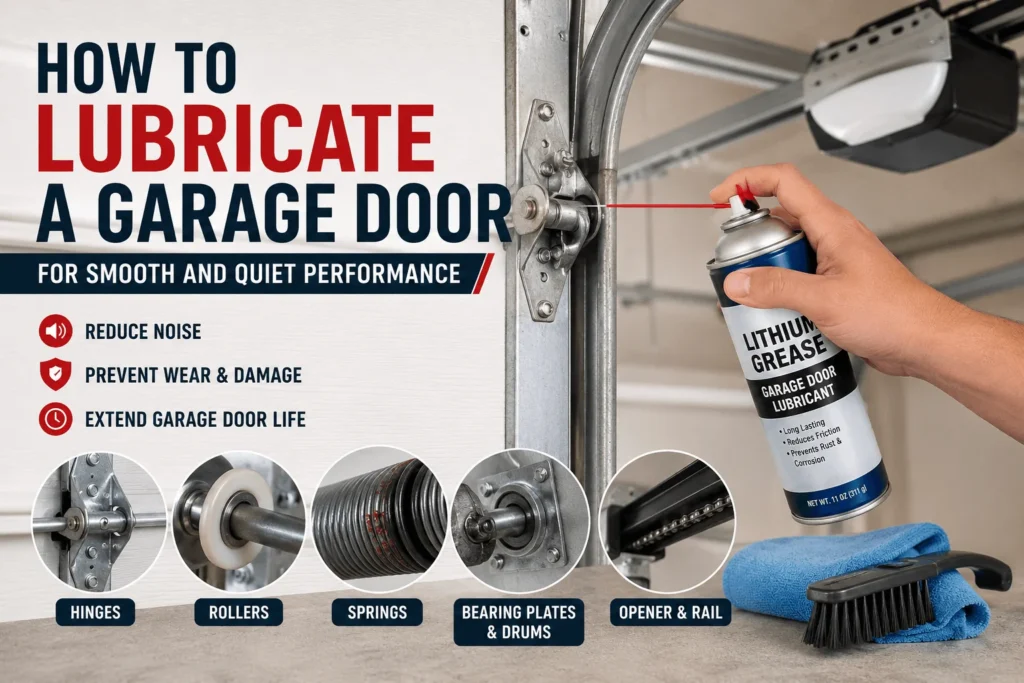
Does your garage door make a loud, scary noise or a steady rubbing sound that wakes up everyone nearby? These “first warning” signs, plus shaky, jumpy movements, are not just annoying; they are a call for care. Overlooking these noises puts too much pressure on your motor and parts, usually causing early breaks and very high repair costs.
The good news? You don’t need a mechanic to restore the peace. Learning how to lubricate garage door components is a simple, 10-minute DIY task that can add years to your system’s lifespan. While professional Garage Door Maintenance Services in Las Vegas are great for annual checkups, this guide will show you how to keep things running whisper-quiet today.
Preparation: Tools and the Right Supplies
The “Do Not Use” List
Never use regular WD-40 on your door. Even if you have it at home, it is a cleaner that removes the important oil your door needs to move. Also, do not use heavy car oil or thick grease; these oily liquids gather dirt and hair very fast, which will clog the tracks and stop the whole door from working.
The Gold Standard
To keep your door working well, use only Lithium or Silicone sprays. These special oils work great in very hot or cold weather without getting sticky. Silicone is best for rubber seals and plastic rollers, while white lithium grease is a strong, water-proof shield for metal parts. Using these will help your garage door stay very quiet and run smoothly for a long time.
Required Materials
To do the work well, keep these simple tools ready: a clean cloth to wipe off old dirt, and a vacuum or hard brush to clean the tracks. Last, make sure you have a strong ladder to safely reach the high springs, the top chain, and the upper wheels.
Step 1: Clean the Tracks (The Foundation)
Before you start to spray, you must clean the tracks. Clean tracks give your door a clear path to move, and any dirt there acts like bumps for your rollers. Starting with a clean area makes sure that your hard work really helps the door move better instead of just hiding the real problems.
Crucial Tip: Do Not Lubricate the Tracks
Many people wrongly think that the door tracks need oil. In truth, you should never put grease or oil inside the garage door tracks. They are made to stay dry. Putting oil here does not help at all, as it has no real use and only makes a big mess.
The Process: Wipe Away the Grime
Use your clean cloth or towel to wipe the inside of the straight and curved tracks.
Make sure to clean out old dust, dead bugs, and hard, dried oil. Use a stiff brush or a vacuum if the dirt is hard to remove. It is because these tools are very effective in pulling the trash out of the tight corners and narrow spots.
Why? Prevent Roller Damage
If you put oil on the tracks, the wheels will slip and slide instead of turning the right way. This lack of grip stops the wheels from spinning, which soon causes flat spots to wear into the rollers. Once a wheel loses its round shape, the door will shake and become much louder.
Step 2: Lubricating the Moving Hardware
Hinges: Focus on Pivot Points
As your garage door opens, the flat parts must bend to follow the curve of the tracks. Put a little bit of oil on the joints of every hinge. This makes sure the parts move easily without getting stuck or making noise, which really helps take the heavy load off your whole door system.
Rollers: Nylon and Metal Care
For plastic wheels, put oil only on the small metal balls where the wheel meets the rod; do not spray the plastic part. If you have metal wheels, give the whole wheel a fast spray. This helps the wheels spin easily, stopping them from dragging and causing too much wear on the tracks.
The Springs: Prevent Binding and Rust
In this, you have to spray the entire length of your long or side springs. It is because putting oil on the metal rings stops them from sticking. Moreover, it keeps them from rusting. This easy step stops the loud “bang” noise you hear when a dry, rusty spring suddenly snaps open while the door moves.
Bearing Plates & Drums: Smooth Rotation
Do not forget the parts at both ends of the spring bar. On the middle plates and the moving parts near the drums, put a little oil. It would help to keep these tight spots well-oiled. This would let the bar turn easily. All this ensures that the door lifts evenly and stays quiet every single time.
Step 3: Managing the Opener and Rail
Screw Drive vs. Belt/Chain Drive
How you fix it depends on your type. A screw drive has a long, threaded rod that needs oil all over to work well. On the other hand, chain or belt drives mostly take care of themselves; you only need to put a drop of oil on the small wheels or pulleys at the ends.
The “Less is More” Rule
When you use your spray, remember that a small amount is enough. The use of excessive oil is never beneficial. It becomes the reason for messy drips on your car or floor. For this, use quick, short sprays. Along with it, keep a cloth ready to catch any extra oil. It would ensure that the job stays clean and looks good.
Final Steps and Testing
Wipe Down: Clean the Excess
To wipe off any extra garage door lubricant that is dripping or gathering, take your clean cloth. Have a close inspection of the hinges and the bottom of the springs. Cleaning up these drips is very effective. It is because it drips that keeps your garage floor from getting messy. Moreover, it ensures that the dust does not stick to spots with too much oil.
The Cycle Test: Even Distribution
Using your hand or the remote, open and close the door two or three times. Moving the door like this helps the garage door tune up, the wheels, joints, and small parts. Running the door a few times makes sure every moving part is fully covered and works its best.
The “Listen” Test: Final Inspection
As the door moves, perform a “listen” test to see if your garage door making noise is a thing of the past. If you still hear a specific squeak or grind, identify that “hot spot” and apply a targeted second spray. Once you achieve that whisper-quiet glide, your maintenance task is successfully complete.
Maintenance Schedule: How Often is Enough?
The “Change of Seasons” Rule
Try to oil your parts every six months to keep the door strong. The best plan is to do it when the weather changes: do your work once before the cold winter and again after the hot summer. This makes sure the moving parts stay safe from the cold, the heat, and the wet air.
Visual Inspection Checklist
While you are on the ladder, look closely at all the parts. Closely check for the worn-out ropes, loose screws, or wheels that look broken or crooked. Figuring out these small problems now lets you tighten parts. But take safety measures and call the expert before something breaks
Conclusion
Learning how to lubricate garage door is an easy way to protect the biggest moving part of your home. If you do this every six months, you stop loud noises and prevent parts from breaking early, which saves you money. Remember, you want a smooth, quiet door, not a big mess, so use good sprays and keep the tracks clean. A few minutes of work today keeps your door safe and very quiet for a long time. Your neighbors and your bank account will be happy.
Ready for a Smooth and Quiet Garage Door?
Do not let a noisy door ruin your quiet time or cause expensive bills. If you are facing the inconveniences in the proper functioning of your door. Then our expert team is ready to help you. Just make a call to us right now to get the support of professionals. We make sure that your garage door keeps working perfectly all year long.
Recent Posts


How to Lubricate a Garage…
May 15, 2026

9 Signs You Need Professional…
May 6, 2026

Top Garage Door Problems in…
May 4, 2026